
Choosing new software is never a trivial decision. Whether you're investing in an ERP platform, a Student Information System (SIS), timetabling software or an HR system, the solution you choose is likely to support your institution for years to come.
After vendor demonstrations, most platforms appear to tick every box.
But how can you be confident you're making the right investment? More importantly, how can you be sure the software will perform effectively with your institution's data, processes and existing systems before committing to a full implementation?
That's why many institutions choose to carry out a Proof of Concept (POC) before making their final investment decision.
What is a Software Proof of Concept (POC)?
A Proof of Concept (POC) is a structured evaluation carried out before implementing new software. Its purpose is to confirm that a solution genuinely meets your operational and technical requirements under conditions that closely reflect your real operating environment.
Unlike a standard sales demonstration, a POC is typically based on representative data, realistic scenarios and the technical constraints unique to your organisation.
Ultimately, it answers one key question: Is this software genuinely the right fit for our institution?
A POC requires additional time and investment, but in most cases, it's far less costly than selecting the wrong software.
Why run a POC before choosing software?
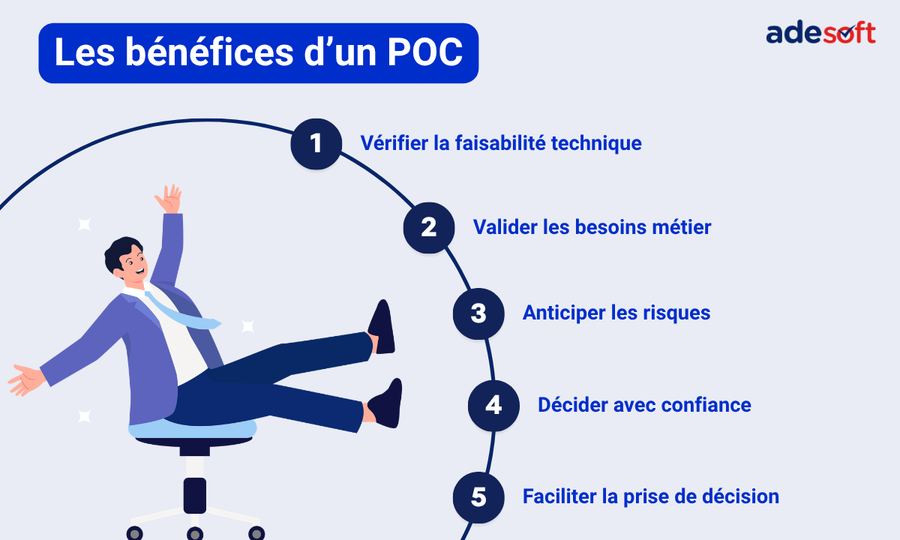
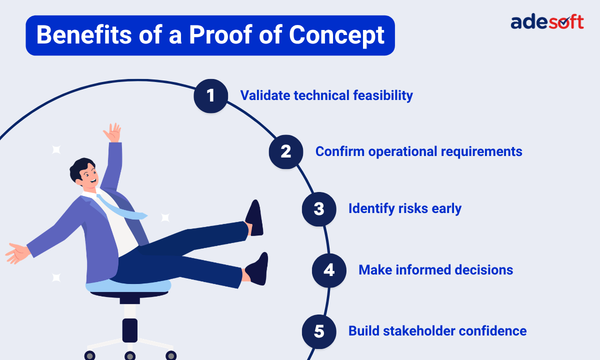
✅ Make sure the software truly meets your needs
A product demo shows what software can do.A Proof of Concept shows how it performs within your organisation. It validates that the solution supports your processes, operational requirements and the expectations of future users.
✅ Confirm technical compatibility
You may operate in complex digital ecosystems. A POC helps verify that the solution integrates successfully with your existing systems and data before implementation begins.
In a university setting, for example, academic operations, timetabling, student records, HR, finance, all need to work seamlessly together.
✅ Identify risks before implementation
Some challenges only become apparent when software is tested using genuine institutional data.
Configuration requirements, integration issues or gaps in functionality are significantly easier and less expensive to resolve before contracts are signed than during implementation.
✅ Give stakeholders confidence
Investing in institutional software involves significant investment. Decision-makers need evidence, not assumptions. A POC provides measurable results based on realistic scenarios, enabling IT leaders, project team and stakeholders to reduce uncertainty, justify decisions and move forward with greater confidence.
How to run a successful Proof of Concept?

1. Define clear objectives
Before the project begins, establish exactly what the POC needs to prove.
Identify the key processes, critical features and technical requirements you want to validate. Define clear success criteria so that the outcome can be measured objectively.
2. Build a realistic test environment
A successful POC should reflect the complexity of your institution.
There's no need to replicate your entire business environment, only a representative sample that provides meaningful insights into how the software will perform.
3. Test!
Depending on the project, testing may be led by your internal teams or prepared largely by the software vendor (or implementation partner) to minimise the workload for your staff.
4. Evaluate the outcomes
Review functional fit, technical integration, usability and operational performance before reaching a Go/No-Go decision.
The objective is to ensure your institution has the evidence needed to invest with confidence.
Should everyone run a POC before buying software?
Not necessarily.
The answer depends on the scale and strategic importance of your project. For small or low-risk projects, a detailed product demo may provide sufficient reassurance.
However, when software will have a long-term impact on your business processes, a Proof of Concept becomes an invaluable decision-making tool.
While it don't guarantee project success, a POC dramatically improves your chances of making the right software investment.
How does a POC work at Adesoft?
At Adesoft, we help organisations validate their software investment before committing to a new scheduling solution. Using a representative sample of your timetabling data, our experts build a realistic project environment that reflects your institution's training structure, teaching courses and timetabling constraints.
Depending on your requirements, our team can manage most of the modelling and testing process, reducing the workload for your internal teams and limiting the need for extensive user training.
You validate the scheduling functional fit, test real planning scenarios and understand the benefits of our solution before making a final decision.
FAQs
What is the difference between a Proof of Concept and a software demonstration?
A demonstration showcases the software using scenarios prepared by the vendor.
A POC goes much further. It evaluates the solution using your company data, processes and technical environment, giving you a realistic picture of how it will perform in practice.
POC vs PoV vs MVP: what's the difference?
A POC (Proof of Concept) confirms that a solution is both technically and functionally capable of meeting your institution's requirements.
A PoV (Proof of Value) focuses more on showing the measurable benefits the solution can deliver (for example in terms of time savings, resource optimisation, or process improvements).
A MVP (Minimum Viable Product) is the first usable version of a new product. It includes only the essential functionality required for real-world use and enables organisations to gather feedback before further development.
How long does a Proof of Concept take?
The duration of a POC depends on the scope and complexity of the project. Most POCs take anywhere from a few weeks to several months.
Timescales vary depending on the amount of data to model, the IT systems involved and the level of collaboration between the institution and the software supplier.
The objective isn't to move quickly at all costs, it's to gather enough evidence to make a confident investment decision.
Is a Proof of Concept worth the investment?
In most cases, yes.
While a POC requires time and budget, these costs are usually minimal compared with the financial and operational impact of selecting the wrong software.
When a solution will support your institution for many years, validating your decision before implementation can significantly reduce both financial and operational risk.
Are there any disadvantages to running a POC?
Yes.
Like any evaluation project, a Proof of Concept requires time, resources and input from key stakeholders.
Preparing representative data, validating business processes and involving key users all require effort, particularly where complex institutional requirements need to be assessed.
However, these activities are generally far less costly than dealing with implementation delays, low user adoption or replacing an unsuitable solution after deployment.