
Unfortunately, training for industrial careers is often treated like any other training program. However, as soon as you step into the day-to-day operations of a training center, a corporate university, or an on-site campus, the rules change. Its organization is shaped by constraints that are rarely found elsewhere.
In the aerospace industry, training on a new maintenance procedure must meet particularly strict compliance requirements. In a hospital, organizing a training session may require coordinating with the availability of operating rooms, technical facilities, or medical equipment—all of which are also essential for patient care. In the rail industry, the arrival of new rolling stock sometimes requires that crews be trained quickly before it enters service.
These situations illustrate a reality that is often underestimated: the challenge lies not only in the training content, but also in organizing everything necessary to make the training happen.
This is precisely what sets training for industrial or technical trades apart. It is organized not by scheduling sessions, but by coordinating skills, educational resources, infrastructure, and constraints that bear no resemblance to those of most other training programs.
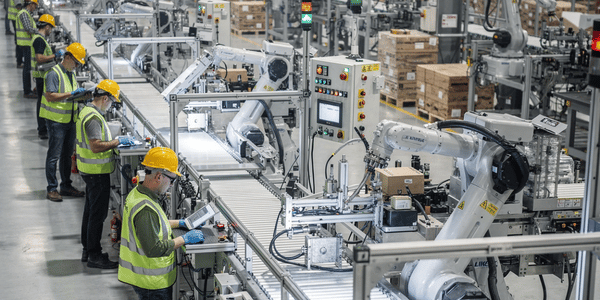
What a training manager for industrial trades actually oversees
When we talk about training, we automatically think of a course catalog, an instructor, a classroom, and learners.
At an industrial training center, the reality is quite different.
Even before a session can take place, a number of conditions must be met that go well beyond the realm of pedagogy. The curriculum must be coherent, a subject-matter expert must be available, a workshop or technical facility must be reserved, the equipment must be operational, and the participants’ clearances must be in order.
Depending on the organization, it is also necessary to coordinate multiple training sites, manage capacity, reserve simulators, plan for supplies, and arrange travel for trainers and trainees.
In other words, a manager in charge of industrial vocational training does not simply oversee training programs. He or she manages a training environment in which each resource depends on the others.
Let’s take an example. A company is rolling out new rolling stock across several technical centers. It’s not just a matter of scheduling sessions. The company must identify the employees involved, assign the right trainers, reserve the equipment, organize the sessions across multiple sites, and ensure that every technician is certified before the equipment goes into service.
In a hospital, the logic is the same. Rescheduling a training session involves coordinating the staff, equipment, technical spaces, and the facility’s specific constraints.
Organizing training, therefore, is not simply a matter of scheduling sessions. It involves coordinating a set of resources, skills, and constraints that must remain consistent at all times.
Coordinating Industrial Training: Why Traditional Tools Have Their Limitations
An LMS, a TMS, a shared calendar, or an Excel spreadsheet each serve a specific purpose: managing registrations, distributing content, tracking learners, reserving a room, or creating a schedule.
These tools are not the issue. They serve their purpose perfectly.
On the other hand, they are generally not designed to control and manage an entire training environment.
However, in industrial settings, every decision can have implications across multiple aspects of the program. Postponing a session isn’t just a matter of rescheduling a date. It may require finding another instructor, reserving a new workshop space, verifying participants’ certifications, ensuring the consistency of a training pathway, or rescheduling equipment that has already been booked.
The challenge lies not in managing a resource or a session, but in coordinating all the dependencies that connect them.
It is precisely at this point that traditional approaches reveal their limitations. Not because they are unsuitable, but because they were designed to manage a part of the system, not to coordinate it as a whole.
Organize Training with ADE Entreprise
It is precisely because training for industrial trades follows its own set of rules that it requires a solution tailored to this reality.
ADE Enterprise does more than just manage training sessions. The solution coordinates your entire training program: learning paths, skills, certifications, instructors, workshops, equipment, locations, availability, and travel arrangements.
Let’s return to the example of a hospital. A hands-on training session scheduled to take place in a teaching operating room ends up being canceled. With ADE Entreprise, teams can quickly identify a new time slot that fits the schedules of healthcare professionals, the availability of technical spaces, and the necessary equipment—all while maintaining the consistency of the training program and adhering to the facility’s requirements.
As a result, teams spend less time reworking their schedules, feel more at ease when dealing with the unexpected, and maintain a consistent organizational structure—even when day-to-day operations require numerous adjustments.
Because, at the end of the day, organizing training for industrial trades isn't just about filling a schedule. It's about ensuring that each training session can take place at the right time, with the right people, the right resources, and under the right conditions.